A lumper fee is what a receiver or warehouse charges to have third-party workers, called lumpers, unload a truck. Under federal law, when a shipper or receiver requires that a truck be unloaded with help, the shipper or receiver is responsible for providing that help or paying for it. In practice, the driver often pays at the dock and the charge is billed back, so knowing your receivers’ rules up front prevents surprise invoices.
What is a lumper?
A lumper is a worker, usually from a third-party labor company, who loads or unloads freight at a warehouse or distribution center. Many large receivers, especially grocery and retail distribution centers, use lumper services instead of their own staff or the truck driver.
Lumpers typically break down pallets, sort freight by SKU, restack product onto the receiver’s pallets, and stage it on the dock. The more handling your freight needs, the more the service costs.
Who pays the lumper fee?
Federal law puts the responsibility on whoever requires the help. Under 49 U.S.C. 14103(a), when a shipper or receiver requires that a truck be assisted with loading or unloading, the shipper or receiver must provide that assistance or compensate the truck’s owner or operator for all associated costs.
Source: U.S. Code, Title 49, Section 14103, via GovInfo (2024 edition)
Here is how that usually plays out. The receiver requires lumper service. The driver pays the lumper at the dock, often with an electronic payment code, and gets a receipt. The carrier bills the charge to the broker, and the broker bills it to the shipper as an accessorial charge.
So even if your freight is delivered to someone else’s dock, the lumper fee can land on your invoice. That is why it pays to know each receiver’s unloading rules before you book.
Can a receiver force a driver to use lumpers?
Not by coercion. Federal law makes it unlawful to coerce, or try to coerce, a motor carrier into loading or unloading freight or into paying someone else to do it.
Source: U.S. Code, Title 49, Section 14103(b), via GovInfo (2024 edition)
Receivers can still set dock policies, like requiring lumpers for safety or speed. What matters for shippers is that those policies are known before the truck arrives, so the cost is planned instead of disputed.
What affects the cost of lumper service?
- Floor-loaded freight. Loose cases take far longer to unload than palletized freight.
- Pallet breakdown and restacking. Some receivers require freight moved onto their own pallets.
- Sorting by SKU or lot. Mixed loads take more labor to separate.
- Pallet count and weight. More pallets and heavier freight mean more work.
- The facility itself. Each receiver or lumper company sets its own rates.
How do you avoid surprise lumper charges?
Most lumper disputes start with missing information, not bad intentions. A few habits prevent nearly all of them.
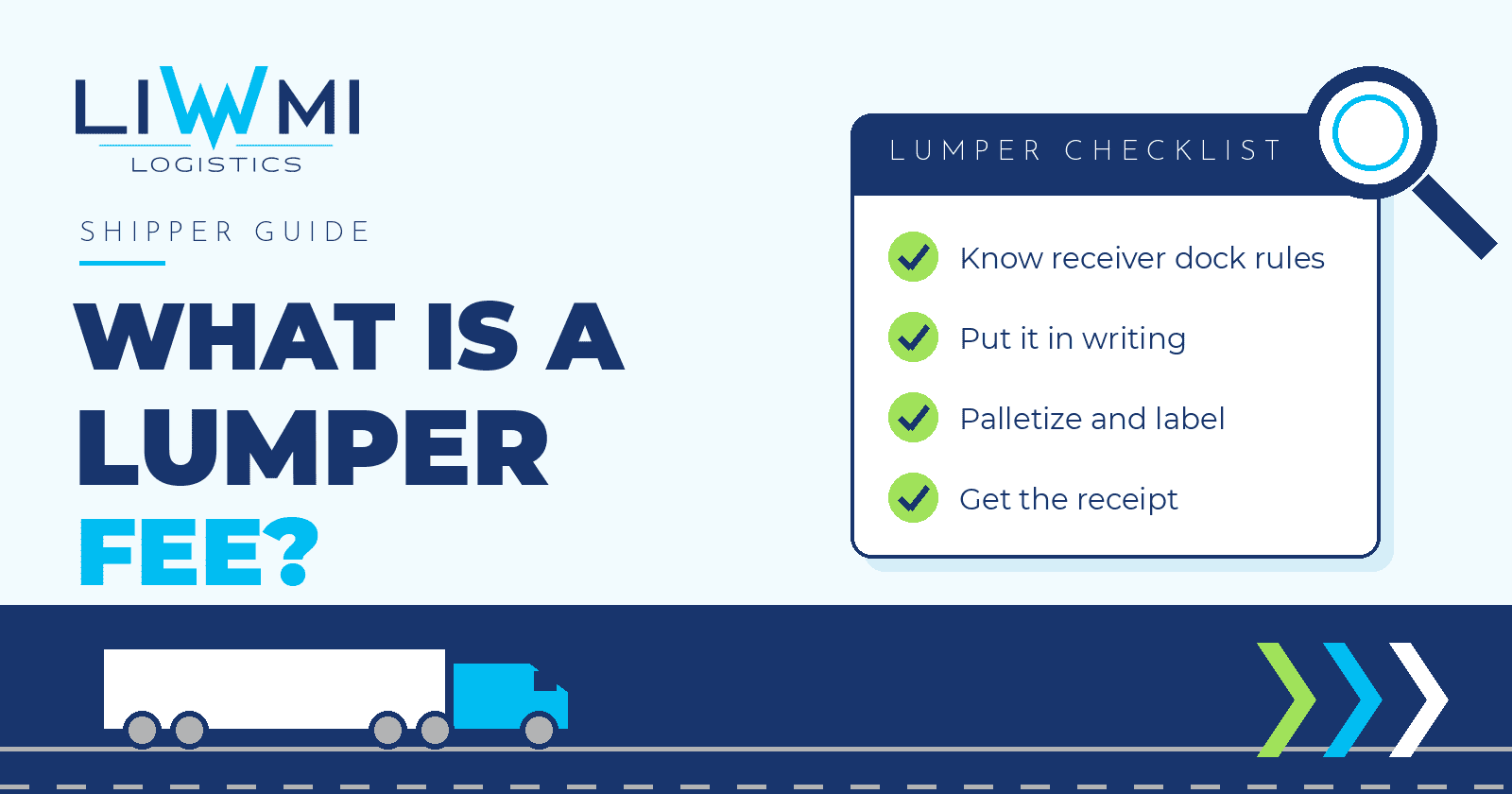
- Ask the receiver about unloading rules before you ship, and share them with your broker.
- Put lumper responsibility in writing on the rate confirmation or in your purchase terms.
- Palletize and label freight cleanly so it unloads faster.
- Require an official receipt for every lumper charge, showing the facility, date, and amount.
- Review accessorials on every invoice and question anything without documentation.
The LIWMI Take
A lumper fee is not a scam. It is a real cost of how some receivers run their docks. The problem is the surprise, and surprises are fixable.
When you book with LIWMI Logistics, tell us about any receiver unloading requirements and we will plan around them. If a lumper charge comes up, you get the receipt with it. No mystery line items, and no “we’ll sort it out later.”
What shippers should do now
- List your regular receivers and note which ones require lumper service.
- Add lumper responsibility to your shipping terms with customers.
- Ask your broker to flag lumper requirements when you request a quote.
- Require a receipt for every lumper charge before you pay it.
Lumper fee FAQs
Is a lumper fee the same as detention?
No. A lumper fee pays for labor to load or unload freight. Detention pays the carrier for time the truck waits beyond the free time allowed at a pickup or delivery. A single delivery can have both charges.
Does the driver have to pay the lumper?
Often the driver pays at the dock because the receiver requires it before unloading. That payment is then reimbursed through the carrier and broker and billed as an accessorial. Under federal law, the shipper or receiver that requires the help is responsible for the cost.
Can a driver unload the truck instead of using lumpers?
Sometimes. Some receivers allow drivers to unload their own freight, and some do not. The facility’s dock policy decides, so confirm it before the delivery appointment.
What should a lumper receipt show?
A valid lumper receipt should show the facility name, the date, the load or PO number, and the amount paid. Without a receipt, a lumper charge is hard to verify and easy to dispute.
Need a broker who flags this stuff up front?
Request a quote and a real person on our team will get back to you the same business day. Want to see where we operate? Browse the markets we serve or all of our services.
Sources
- U.S. Government Publishing Office. United States Code, Title 49, Section 14103: Loading and unloading motor vehicles. 2024 edition.